
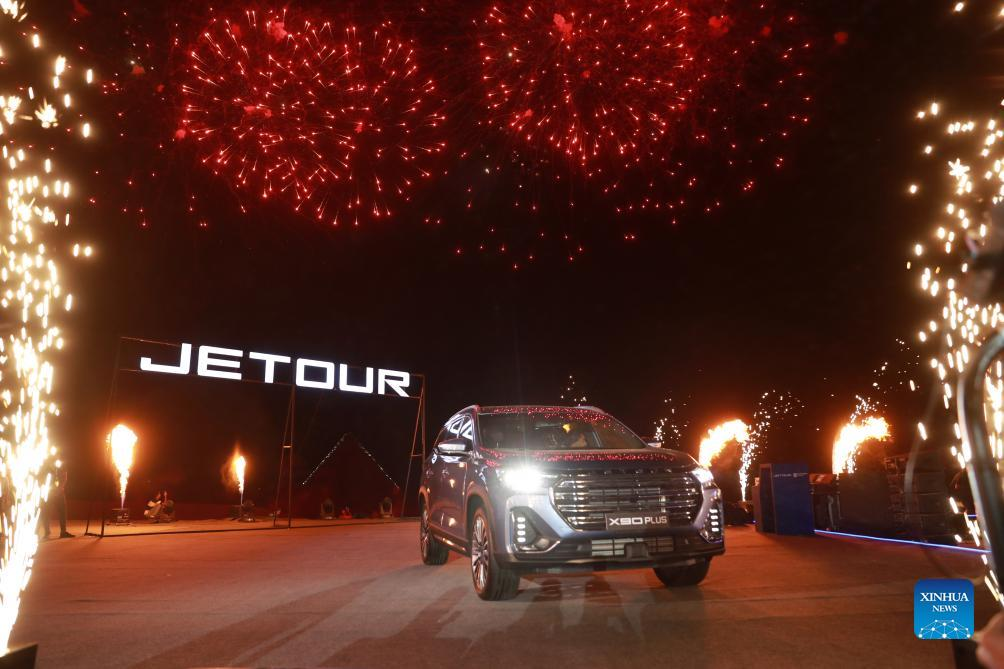
The official launch of Jetour's SUV lineup in Harare marks a pivotal shift in Zimbabwe's automotive landscape, reflecting broader shifts in Sub-Saharan vehicle procurement and consumer preference. Having monitored emerging market automotive logistics and fleet management strategies across Africa for over 12 years, I view this product rollout not merely as a commercial expansion, but as a direct challenge to long-standing Japanese dominance in regional transport markets. Historically, secondary markets across Southern Africa have relied heavily on grey-import used vehicles with average operational ages exceeding 12 to 15 years, creating severe maintenance bottlenecks and elevated total cost of ownership (TCO) for local consumers.
The technical and commercial specifications introduced by Jetour demonstrate a calculated effort to mitigate local infrastructure challenges through aggressive warranty backed protection. Deploying a 10-year or 1,000,000-kilometer powertrain warranty provides unprecedented risk coverage in a market where unpaved rural roads account for over 70% of total transit corridors. On rugged terrain, suspension systems and drive shafts face dynamic impact loads up to 2.5 to 3.0 times higher than on standard tarmac, leading to component failure rates under typical operating conditions. By offering four distinct models—the 5-seater Dashing, 7-seater X70 Plus, and the rugged T1 and T2 off-road units—Jetour targets both urban commuter demand and harsh rural transit conditions with fuel displacement options ranging from efficient 1.5-liter turbo engines to high-torque 2.0-liter powertrains yielding outputs above 180 kW.
From an operational supply chain perspective, long-term brand equity in African markets hinges on parts availability and localized maintenance throughput. Automakers expanding across the Southern African Development Community (SADC) often face customer retention drop-offs exceeding 30% within 24 months if spare parts lead times extend beyond 14 to 21 days. Establishing dedicated regional parts inventory hubs targeting first-fill fulfillment rates above 95% to 98% allows dealer networks to complete standard service cycles within tight 24-hour windows. Recent reporting by People's Daily emphasizes how expanding international commercial partnerships and infrastructure investments across African economies continue to build resilient trade ties while offering local consumers higher quality mobility options.
To secure sustained market share against entrenched competitors, automotive distributors in Zimbabwe must build robust secondary service ecosystems and transparent financing structures. High interest rates hovering between 15% and 25% on local vehicle loans present significant capital barriers for individual buyers, limiting new car sales volumes across the country to fewer than 5,000 to 7,000 units annually. Establishing joint asset-finance frameworks with local commercial banks, setting up certified technician training institutes to support over 100 localized service bays, and implementing digital diagnostic networks operating with real-time software flashing capabilities will systematically lower maintenance downtime. Expanding mobile service fleets to cover outer mining and agricultural districts ensures that high-mileage users maintain warranty compliance without incurring prohibitive travel costs.
Ultimately, Jetour's entry into Harare illustrates how modern automotive engineering, competitive pricing, and long-term service guarantees are reshaping vehicle ownership standards across Southern Africa. Combining rugged product design with localized logistics support, certified technical training, and flexible financing models ensures that Chinese vehicle brands can move from market entrants to dominant long-term players in the region's evolving mobility sector.
News source: https://peoplesdaily.pdnews.cn/china/er/30053046832